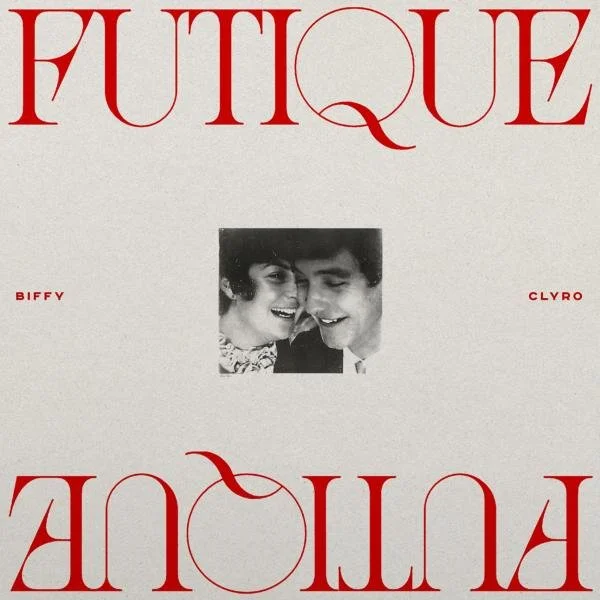
Biffy Clyro’s Futique arrives with the weight of history on its shoulders — a tenth album from a band who’ve spent three decades burning at full tilt, now forced to confront what it means to keep going. The result is a record that feels both familiar and startlingly new: a body of work shaped by bruised egos, frayed relationships, and the slow, stubborn rebuild that comes after everything threatens to fall apart. It’s introspective without wallowing, vulnerable without melodrama, and unmistakably Biffy in its ability to turn personal crisis into widescreen catharsis.
From the outset, Futique moves with a kind of controlled swagger, a band rediscovering themselves in real time. The opening track, “A Little Love”, sets that tone immediately — upbeat and pop-leaning, its deceptively bright chorus masking the unease threaded through the lyrics. There’s an undercurrent of reflection here, a melodic pull that signals a group aware of the years behind them yet still searching for the shape of what comes next. Throughout the album, Simon Neil’s vocals take on a near-detached clarity, carrying the weight of experience without drifting into nostalgia.
Musically, the record oscillates between sharp-edged aggression and sweeping, cinematic release. What’s striking is the sense of space: synth textures, xylophone glimmers, and off-kilter rhythmic shifts appear not as gimmicks but deliberate choices that allow the songs to breathe. This is Biffy Clyro embracing their past — the raw, scrappy energy that once defined them — while folding in Talking Heads-esque new-wave quirks and the stadium-sized hooks that have become their trademark. It’s a balance that feels lived-in, and crucially, earned.
Tracks like “Hunting Season” tap into that early-career volatility, channelling a kind of wired urgency that long-time fans will instantly recognise. It’s messy in the best way — a reminder of the band’s instinctive knack for chaos shaped into something melodic and vital. “Friendshipping”, by contrast, explodes with big-room confidence, a euphoric release that acts as a thematic counterpart to the devastating “Goodbye”, one of the album’s emotional centrepieces. Here, the band lay everything bare: mental health struggles, creative burnout, and the unspoken fear that the end might have already been written.
The quieter moments land just as hard. “A Thousand One” floats in reflective grief; “Two People In Love” drifts between atmospheric stillness and John Carpenter-style unease; Dearest Amygdala finds unexpected humour in its funky, synth-forward experimentation. Even the album's most mournful track, “Woe Is Me, Wow Is You”, refuses resignation — instead reaffirming that “this ship is built to last,” a line that feels less like a lyric and more like a collective decision.
Lyrically, Futique reads like the band taking stock of their shared past: the wins, the fractures, the years spent pushing through exhaustion simply because they didn’t know how to stop. Yet the record never collapses into self-mythologising. Instead, it treats ageing, self-belief, friendship, and renewal with clarity and honesty, shaping them into something universally resonant.
For a band ten albums in, this could have been a victory lap or a quiet fade. Instead, Futique is something far braver — a reinvention built from truth, tension, and the unwavering belief that there’s still more to say. It’s Biffy Clyro alive and evolving, a band choosing to begin again rather than bow out.